

AI automation benefits for small enterprise
What is automation with AI and how it can benefit small businesses. What this means in real life examples and how much is AI being used in EU today?
Argo Leetmaa
CEO, Revolvation
· 9 min read
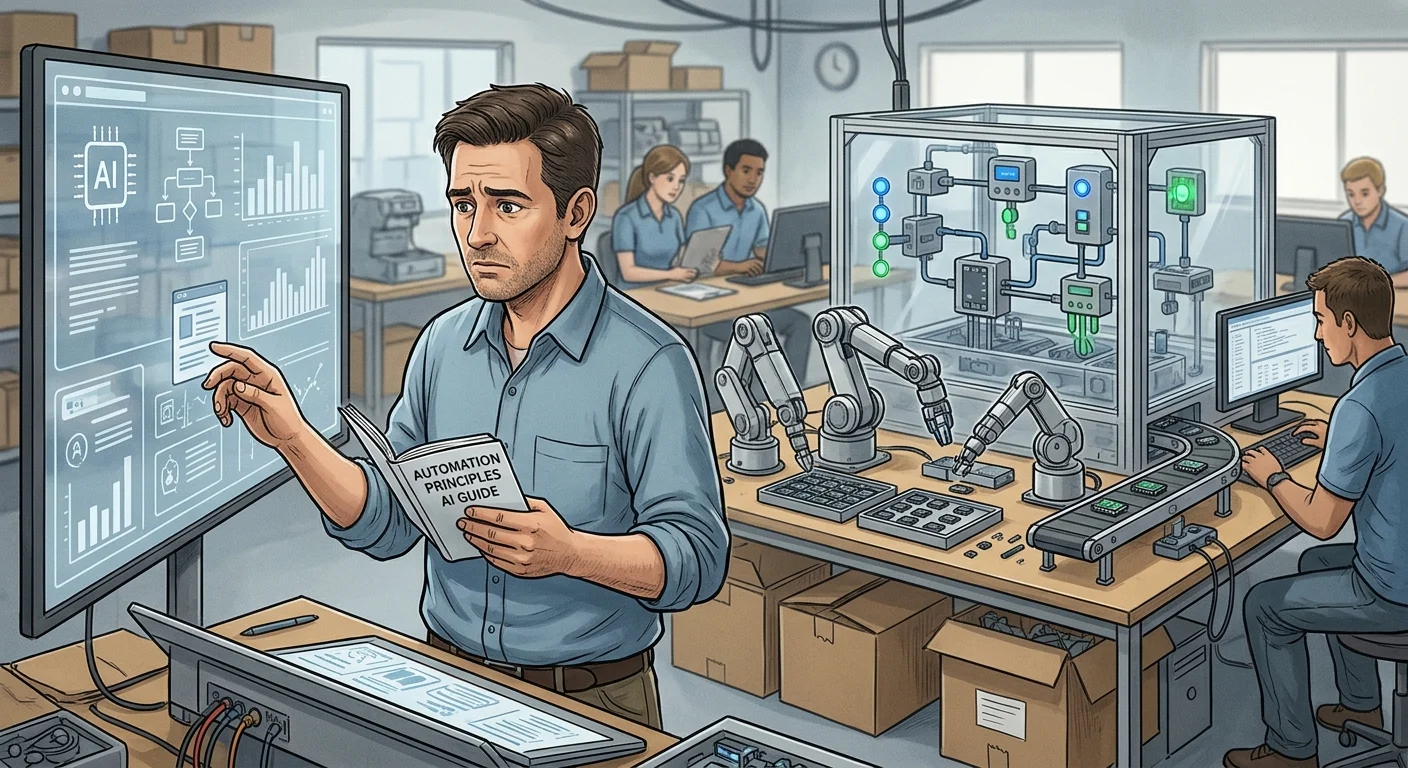
For many, the term "AI automation" may still seem technical and unfamiliar, despite the significant media coverage it has received lately. The concept itself is actually quite simple: software or an automated workflow—comprising various components (which may or may not include an AI agent or model)—takes over manual, repetitive tasks. This allows you and your team to focus on what is truly important for your business. Naturally, it is essential for a business to ensure that quotes, invoices, reports, orders, and other routine tasks are completed and sent out. However, these processes do not constitute the core or the true value of your business. Instead, that value lies in your specific services or skills, your interactions with clients, the expansion of your operations, and so on. Artificial intelligence or automation cannot handle these core aspects for you (though many tools and automation solutions exist to support them); consequently, the time spent on these high-value activities is the most precious.
What is automation, and where does artificial intelligence come into play?
Imagine a typical sales inquiry. A client fills out a form on a website. Someone then copies the data into a spreadsheet, sends a confirmation email acknowledging receipt of the inquiry, adds the new client’s details to the CRM, and notifies a salesperson. While each individual step may require few resources, the entire procedure still consumes tens of minutes. Furthermore, all these stages are repetitive—involving the same applications, the same files, and the same actions.
Traditional automation executes tasks based on fixed rules: "if a form is filled out, perform these five steps." This approach works perfectly in scenarios where every stage is predictable and repetitive. Significant, measurable gains can be achieved here—especially when these tasks fall to a single individual, such as a founder who simultaneously acts as CEO, salesperson, and customer relationship manager.
However, by integrating artificial intelligence into such an automated workflow, the system gains the ability to "understand." AI can read the content of an email, an invoice, or a customer message, analyze the actual request, categorize it correctly, apply tags, send notifications, and even draft a response. The human’s role is simply to review and approve the draft. By this point, the new client has already been added to a CRM (or even an Excel spreadsheet), and the necessary background information—such as company details, public data, media coverage, or insights into which products might suit or interest the client—has been gathered. Suitable times for client calls or emails are already identified in the calendar; sales call drafts or essential questions are ready for review; proposal templates are pre-filled; and summaries of client meetings are analyzed in the background—all supporting a seamless workflow across every stage of the process.
In practice, these two solutions work in tandem: automation moves data from one place to another, while artificial intelligence handles tasks that require reading, analysis, and comprehension.

Where is this most useful for a small business?
- Invoices and documents: reading data and entering it into accounting records or databases.
- Customer service: answering routine or recurring questions and routing more complex inquiries to a human.
- Sales inquiries: providing quick responses, saving data, and sending follow-up communications.
- Reports: automatically generating weekly or monthly reports.
- Content creation: drafting text, summarising information, and preparing materials.
In numbers: how much is AI actually being used in business?
According to Eurostat, 20.0% of enterprises in the European Union (with at least 10 employees) used AI-based tools or solutions in their daily operations in 2025. A year earlier, this figure was 13.5%, and in 2023, it stood at 8.1%. As you can see, usage has more than doubled in just two years. Is the reason simply a massive AI bubble and hype, or is there a tangible benefit driving an increasing number of companies to adopt AI tools and automation solutions in their operations?
Size matters: 17% of small businesses, 30.4% of medium-sized enterprises, and 55% of large companies use AI. These figures indicate that small businesses have significant ground to cover to catch up with their larger counterparts. In fact, they have even more reason to pay attention to this topic; small businesses often lack the spare resources to hire armies of staff or a wide range of specialists—after all, revenue must first reach a level sufficient to support more than just a couple of employees. Furthermore, perpetual growth may not necessarily be the dream of every entrepreneur, service provider, or specialist. There are businesses that function perfectly well at their current scale, where the owner simply needs a bit more free time each week.
Estonia is ahead of the EU average. According to the OECD Economic Survey of Estonia, the share of Estonian companies using artificial intelligence rose from approximately 14% to 23.4% in 2025. However, Estonia still lags behind the Nordic countries in the adoption of AI tools: Denmark stands at 42%, Finland at 37.8%, and Sweden at 35%.
Real-world examples and results
Delivery Hero (IT workflow): The company’s IT team received approximately 800 requests per month to recover locked accounts, with each case taking an average of 35 minutes to resolve manually. Once these recovery requests were moved to an automated workflow—requiring managers only to provide approval—the average time a user remained locked out dropped to 20 minutes. In total, the solution saved approximately 200 working hours per month. You can calculate for yourself what a single working hour is worth within your own company.
Personio: The project manager for Personio’s automation program estimated that the automated processes implemented at the company save a total of approximately 150 hours per month. Furthermore, they noted that they are still only at the beginning of their journey.
Marketing agency: A design and marketing agency commissioned an AI-driven workflow to generate client case studies. The time required to complete a single case study dropped from three working days to less than six hours—a reduction of about 83%. The agency was able to accomplish up to six times more work in the same amount of time. The headcount remained unchanged; the agency simply gained the capacity to perform core business activities on a larger scale using the same resources.
Two examples from our own projects
Brazilian entrepreneur: Administrative tasks had become overwhelming. The entrepreneur could no longer expand because the administrative workload had grown so large that they were unable to keep up with sending out invoices. Every month, the company owner and CEO would spend an entire work week ensuring that all reports and invoices were sent out on time (to keep cash flowing into the account). Growth wasn't stalling due to a lack of demand, but rather because 25% of their time was consumed by administrative tasks related to existing service clients. This is a classic bottleneck for small businesses or solo entrepreneurs: sales and work are there, but the administrative side can't keep up—literally choking off growth. Automation eliminated nearly 90% of this administrative workload, allowing the entrepreneur to abandon the idea of hiring a dedicated assistant just for paperwork. Instead, they began considering hiring a salesperson to accelerate growth, now that they no longer had to fear being buried in administrative tasks.
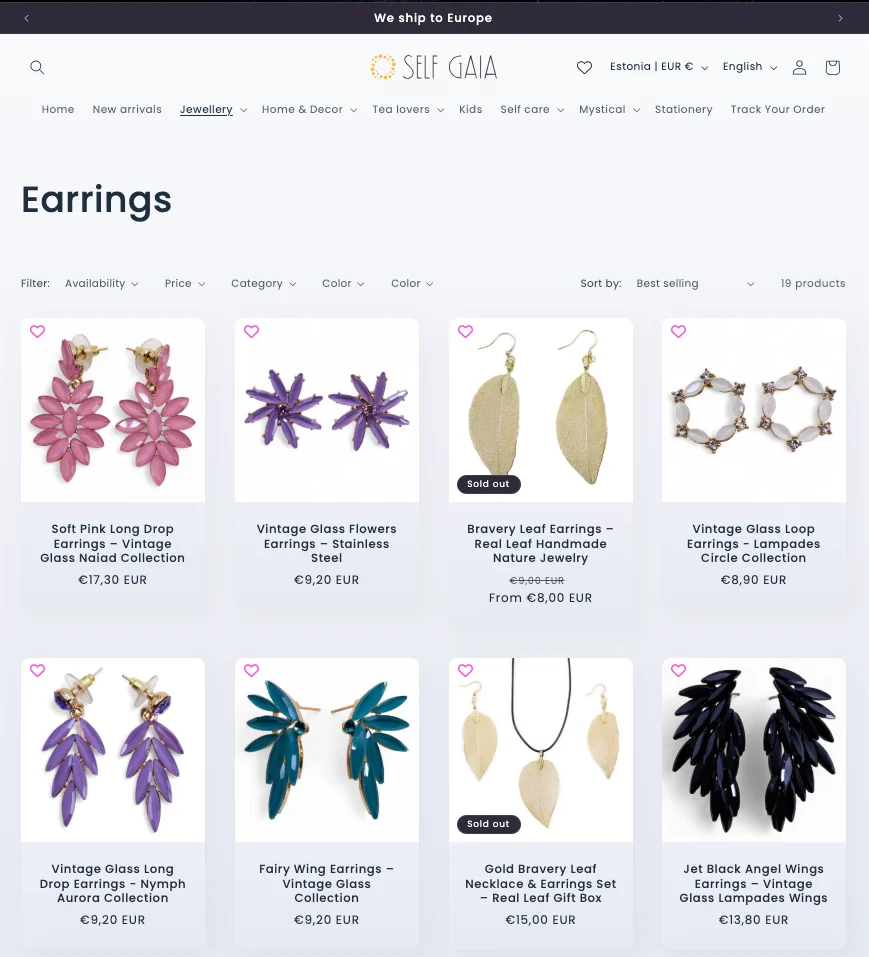
Selfgaya online store: fully automated dropshipping. In a dropshipping model, the seller does not maintain their own inventory. A customer places an order through the online store, the order is routed to the supplier, and the supplier ships the goods directly to the customer. Selfgaya online store operates on a fully automated system, where the entire order process takes place without any manual intervention. As you can see, a small store can function without staff to manually process orders.
What these numbers don't tell you
The success stories of large corporations are built on much larger volumes. The principle applies just as well to a small business, though the number of hours saved may be significantly lower. In a small business, a good outcome—and the time saved—might amount to a few hours a day or even a week, rather than hundreds of hours per month.
Most publicly available use cases come from the tool’s developers or service providers. While these are real, they have almost certainly been cherry-picked and presented in a positive light. Always ask how the results were measured.
Artificial intelligence can make mistakes and requires testing. Therefore, human oversight is still necessary for important decisions and outgoing communications. Furthermore, when handling personal data, you must continue to comply with GDPR requirements.
Where should you start?
Choose a repetitive task that takes at least a couple of hours per week and involves clear, well-defined steps.
Measure the time taken before and after. How long does the task currently take? Without this figure, you won’t be able to determine later whether the solution actually paid off.
Keep a human in the loop. Let the AI create a draft, and have a person review and approve it.
Start small. One functional automation is better than ten half-finished ones.
Sources
Eurostat, “20% of EU enterprises use AI technologies” (December 2025): https://ec.europa.eu/eurostat/web/products-eurostat-news/w/ddn-20251211-2
Eurostat Statistics Explained, use of artificial intelligence in enterprises by size class: https://ec.europa.eu/eurostat/statistics-explained/index.php/Use_of_artificial_intelligence_in_enterprises
OECD Economic Surveys: Estonia 2026: https://www.oecd.org/en/publications/oecd-economic-surveys-estonia-2026_2514521c-en/full-report/seizing-the-opportunities-of-ai-driven-growth_c6079665.html
n8n, Delivery Hero case study: https://n8n.io/case-studies/delivery-hero/
Personio’s journey with n8n (summary): https://growwstacks.com/blog/personio-journey-with-n8n/
Contra, AI-powered case study workflow for a marketing agency (March 2026): https://contra.com/p/QkMALWqe-ai-powered-case-study-generation-workflow-for-marketing-agency